
 Image 1 of 1
The non-human, or more-than-human, has always been a central theme of Dark Mountain, but this is the first anthology we’ve devoted entirely to the animal world – to the ‘wild deerness’, or wilderness, the place where the wild ones live. This book takes its inspiration from medieval bestiaries, but unlike these ancient compendiums, our bestiary doesn’t claim to be anything like comprehensive or representative of all the major kingdoms, classes, species and sub-species. In fact, a Linnaean taxonomical approach is something this book strives to avoid. Instead, we present a kaleidoscopic view, like the multiple images seen through an insect’s compound eye, fragmentary pictures that are chaotic and unordered, but which, perhaps, approximate the incorrigible plurality of the world better than any abstract system can.
In these pages you will find a talking eel; a desert salamander who breathes through its skin; a mysterious time-travelling embroidered bird; a convocation of eagles; a finch carefully observing its human neighbours; the earthy, bloody life of a forest jaguar in Brazil; a turtle swimming through mythic time; feral dogs in the Galapagos; tamed horses, and wild boar, that stray between myth and reality; pigeons, as related to by a man experiencing homelessness; a prodigious cloud of thrips; a letter to a crow; snails; lampreys; the language of whales; the brood-song of a bee colony; bears encountered in dreaming practices and bears that are dangerously close and real; wombats; woodmouse; foxes; spiders; snakes; jellyfish; and five dancing salmon.
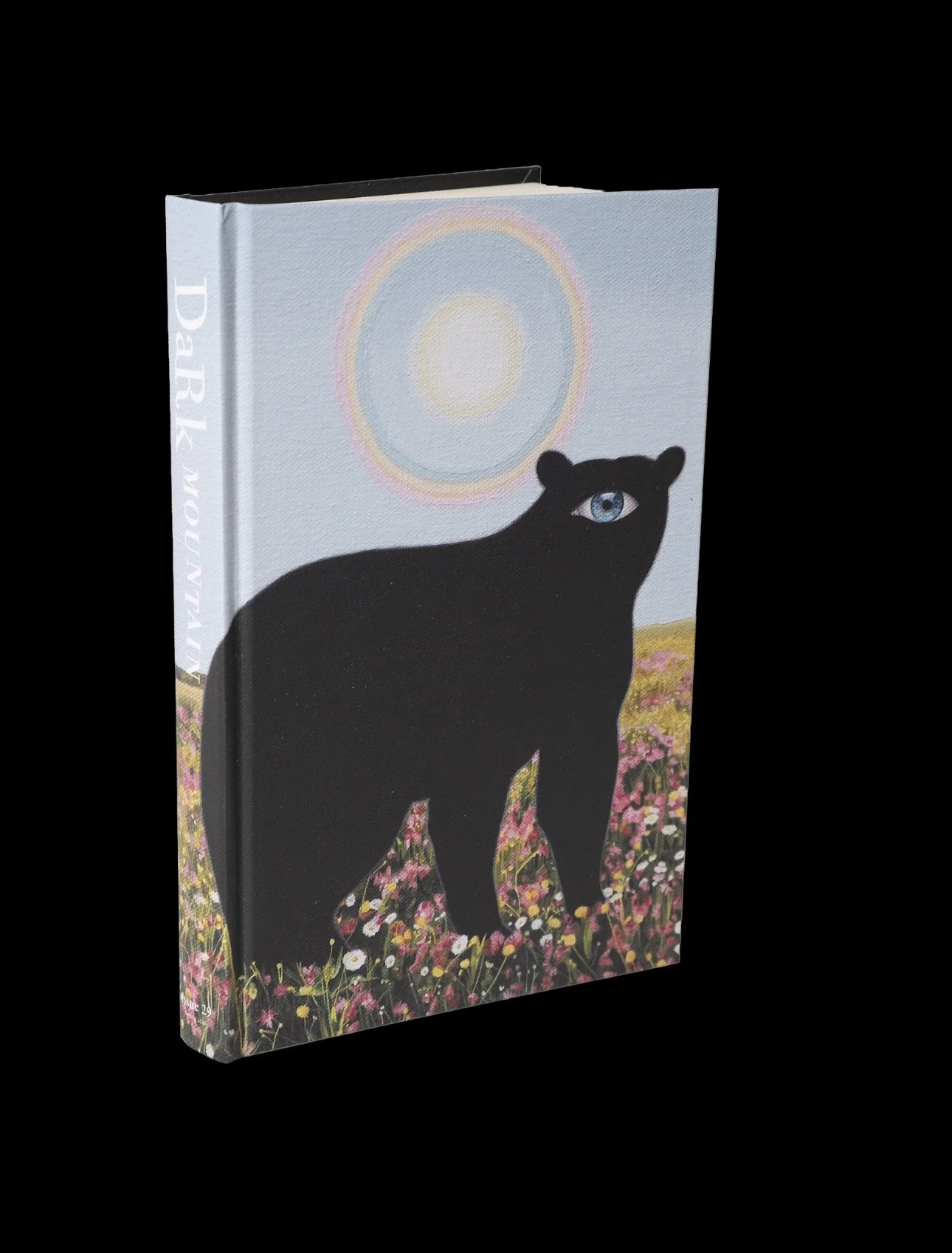
In Dark Mountain: Issue 29 we have tried to navigate the porous boundary between ‘us’ and ‘them’, with all their wild and unpredictable ways of being in the world – ways we may not understand but can marvel at. We invite you to walk, crawl, slither, swim and fly through the wild deerness of these pages, and to give yourself the gift, in our darkening world, of imagining what it’s like to be anything other than human.
The non-human, or more-than-human, has always been a central theme of Dark Mountain, but this is the first anthology we’ve devoted entirely to the animal world – to the ‘wild deerness’, or wilderness, the place where the wild ones live. This book takes its inspiration from medieval bestiaries, but unlike these ancient compendiums, our bestiary doesn’t claim to be anything like comprehensive or representative of all the major kingdoms, classes, species and sub-species. In fact, a Linnaean taxonomical approach is something this book strives to avoid. Instead, we present a kaleidoscopic view, like the multiple images seen through an insect’s compound eye, fragmentary pictures that are chaotic and unordered, but which, perhaps, approximate the incorrigible plurality of the world better than any abstract system can.
In these pages you will find a talking eel; a desert salamander who breathes through its skin; a mysterious time-travelling embroidered bird; a convocation of eagles; a finch carefully observing its human neighbours; the earthy, bloody life of a forest jaguar in Brazil; a turtle swimming through mythic time; feral dogs in the Galapagos; tamed horses, and wild boar, that stray between myth and reality; pigeons, as related to by a man experiencing homelessness; a prodigious cloud of thrips; a letter to a crow; snails; lampreys; the language of whales; the brood-song of a bee colony; bears encountered in dreaming practices and bears that are dangerously close and real; wombats; woodmouse; foxes; spiders; snakes; jellyfish; and five dancing salmon.
In Dark Mountain: Issue 29 we have tried to navigate the porous boundary between ‘us’ and ‘them’, with all their wild and unpredictable ways of being in the world – ways we may not understand but can marvel at. We invite you to walk, crawl, slither, swim and fly through the wild deerness of these pages, and to give yourself the gift, in our darkening world, of imagining what it’s like to be anything other than human.